
From the historical topics collection
The Supreme Court Assesses State Immigration Policy
Historical date unavailable
This is a newly written treatment of the historical topic, revised 28 October 2026. The original publication date has not been verified. No historical date is assigned to this replacement text.
Read the source record. Date evidence: unverified.
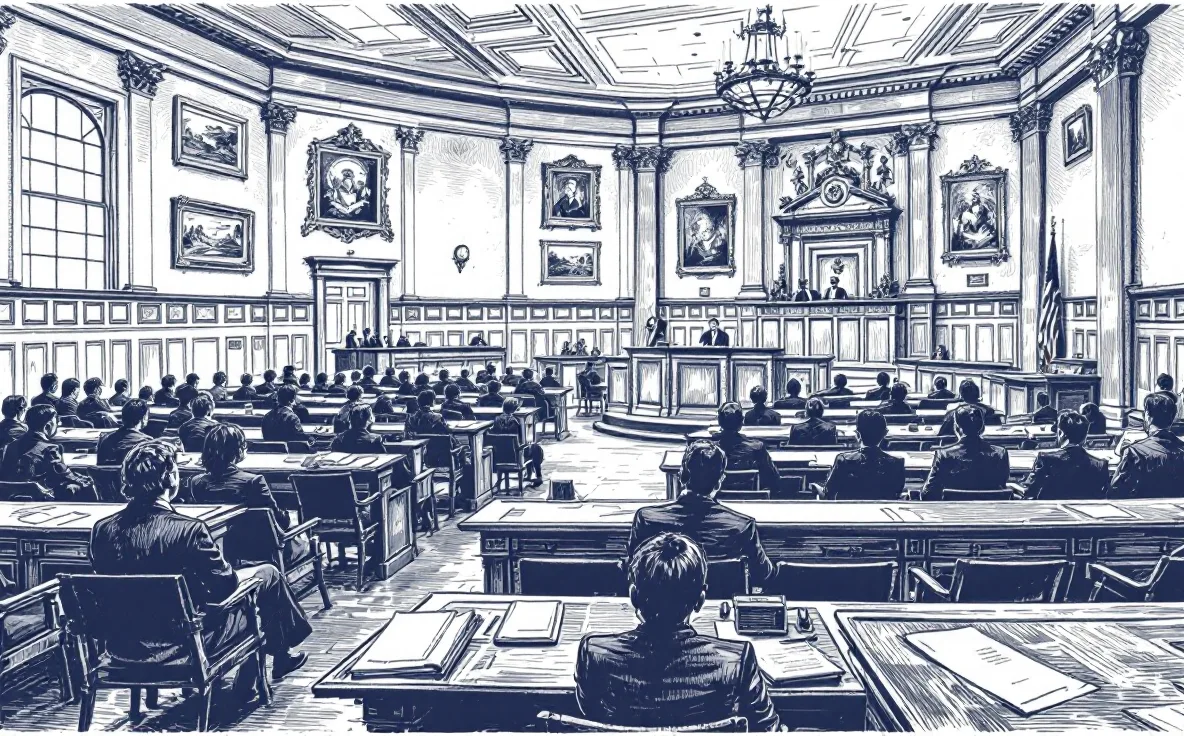
Who decides immigration policy when national and state authorities disagree? The Supreme Court's 2012 decision in Arizona v. United States addressed that question through a challenge to provisions of Arizona's S.B. 1070. The case illustrates federal preemption: a state measure can be displaced by federal law even when its supporters believe it addresses a serious local problem.
This newly written historical explanation addresses the state-immigration-policy subject identified by the old URL. The original article's text and date have not been recovered. The discussion therefore relies on the Court's decision and does not claim to reproduce the missing commentary or provide advice about current enforcement.
The case concerned four provisions
Arizona enacted S.B. 1070 in 2010. The federal government challenged several provisions, and four were before the Supreme Court in the posture described in its June 25, 2012 opinion.
Section 3 created a state offense for failure to comply with federal alien-registration requirements. Section 5(C) made it a state offense for an unauthorized noncitizen to seek or perform work. Section 6 authorized certain warrantless arrests based on suspected removability. Section 2(B) addressed verification of immigration status during certain lawful stops, detentions, or arrests.
The Court held that federal law preempted the first three provisions. It allowed the status-check provision to proceed at that stage, while leaving room for later challenges to its application. That combination is why describing the result as complete approval or complete rejection of the state law is misleading.
Federal responsibility involves a system
The federal immigration framework includes admission, registration, employment rules, and removal, along with relationships between the United States and other countries. The Court's reasoning treated those arrangements as a connected structure rather than a collection of isolated rules that any state could supplement at will.
An important point is that federal policy can include a decision about what not to penalize in a particular way. A state may believe that adding a penalty strengthens enforcement, yet the addition can interfere with the balance Congress established. Agreement about a broad goal does not prove compatibility between legal mechanisms.
That is a general lesson about institutional authority. If one level of government is responsible for coordinating a system, another level's independent intervention can change the system even when it uses similar language. The question is not merely whether both sides oppose the same conduct. It is whether the second authority is permitted to pursue its chosen means.
What the status-check ruling did not decide
The Court's treatment of section 2(B) was narrower than a general endorsement of every possible status inquiry. It emphasized the posture of the challenge and the possibility of later constitutional or preemption problems as the provision was applied. A decision allowing a provision to take effect is different from a judgment that every action under it will be lawful.
Readers should distinguish a facial challenge from an application involving a specific person's treatment. The first asks about the law in the form presented to the court. The second can expose consequences that become clear through implementation. Neither kind of case should be summarized as if it necessarily settles the other.
The distinction also helps explain why practical safeguards matter. A rule may describe one activity while its implementation produces delays, inconsistent treatment, or disputes about the reason for a stop. Those are factual questions as well as legal ones. Historical analysis should not assume an answer without evidence.
Local burdens and national authority
States and communities can experience real pressures associated with migration, including demands on public institutions. Recognizing those pressures does not itself determine which level of government may enact a particular measure. Institutional competence and legal authority are related but separate questions.
For example, a local government may know more about conditions in its schools or neighborhoods than a national official. That knowledge can be valuable to a policy debate. It does not automatically confer power to create a separate immigration classification or penalty. Conversely, federal authority does not make local experience irrelevant.
A constructive discussion asks how information and responsibilities should be coordinated. Which concerns belong to ordinary state and local administration? Which decisions require a nationally consistent rule? How should affected residents obtain an explanation or remedy when agencies disagree? These questions are more precise than a broad contest between national control and local autonomy.
Read the holding before the rhetoric
When studying a court decision, begin with the parties, the challenged provisions, the procedural stage, and the remedy. Then examine the majority's reasoning and the disagreements among the justices. A dissent can illuminate a competing constitutional argument, but it is not the holding of the Court.
The Arizona decision is particularly useful because different provisions received different treatment. Its structure requires readers to evaluate mechanisms rather than assign one verdict to an entire political controversy. It also demonstrates that public frustration does not erase legal boundaries between institutions.
For the ethical questions surrounding the same period, see Christian principles for immigration reform. Our institutions section and public justice collection explore the relationship between legitimate authority, practical responsibility, and fair treatment.