
From the historical topics collection
Teaching the Art of Conversation and Civility
Historical source: 24 June 2011
This is a newly written treatment of the historical topic, revised 28 October 2026. The source date describes the archive evidence; it is not the publication date of this replacement text.
Read the archived source. Date evidence: Date printed in the archived article.
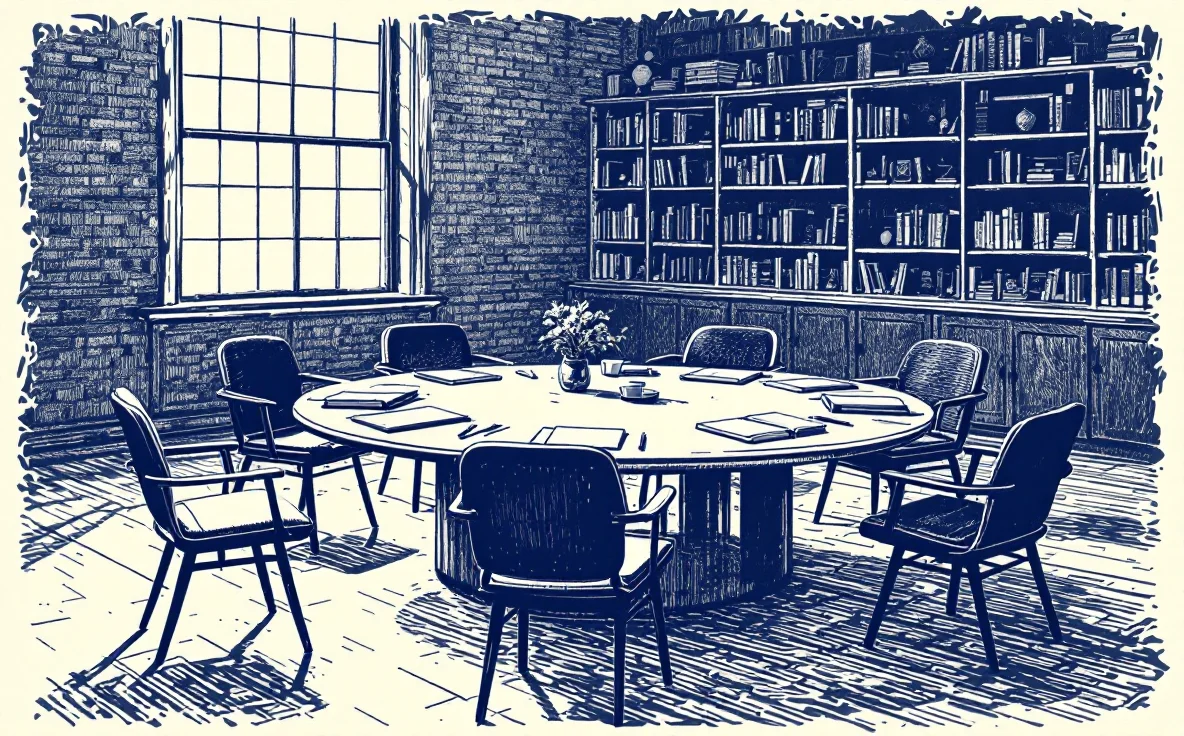
Conversation is a civic skill that has to be practiced before it is needed under pressure. A classroom, reading group, or neighborhood meeting gives people opportunities to distinguish disagreement from contempt, test an argument, and discover what they have misunderstood. Those opportunities matter because public communication often asks people to respond before they have listened carefully.
The June 2011 article preserved at this address explored that problem through the teaching of writing and the emerging online lives of college students. This new treatment develops practical lessons from the subject without adopting the original teacher's experiences as its own. The task is broader than teaching a generation good manners. It concerns how people learn to make claims responsibly in front of others.
Civility needs a purpose
A civil discussion does not require participants to agree, speak without emotion, or pretend that every position is equally sound. Those expectations can make a meeting pleasant while leaving a serious injustice unexamined. A more useful purpose is to create conditions in which people can understand and challenge one another's claims without humiliation or intimidation replacing the argument.
The difference becomes clear in a hypothetical meeting about a library's opening hours. A resident says a proposed reduction will exclude people who work during the day. Another worries that staffing costs cannot be sustained. A moderator can ask each person to explain the concern and identify relevant evidence. Calling either speaker selfish would make the disagreement harder to understand while resolving none of it.
Civility therefore needs both restraint and candor. Restraint prevents personal attacks from taking over. Candor keeps participants from hiding the actual stakes behind agreeable language. The civic practice collection treats both as habits that support public responsibility.
Teach listening as an observable activity
An instruction to listen can be too vague to change behavior. A more concrete exercise asks a participant to summarize another person's argument before answering it. The other person then checks whether the summary captures the claim accurately. The aim is not to force agreement, but to prevent an argument against a position nobody actually holds.
A facilitator can also separate kinds of disagreement. Participants may dispute a fact, interpret the same fact differently, rank competing goods differently, or disagree about which institution should act. Each problem requires a different next step. Finding a missing document may resolve a factual question. It will not automatically settle a conflict between two legitimate priorities.
Marilyn McEntyre's Caring for Words in a Culture of Lies, identified in the historical article, offers a related account of responsibility for language. An Eerdmans discussion of the book presents care for words as a moral and communal practice. Readers can apply that concern by asking whether their language clarifies an opponent's position or makes it easier to dismiss.
Examine another position without pretending to believe it
The archived essay described an exercise in arguing both sides. Its educational value depends on a distinction worth making explicit: representing an argument fairly is different from claiming that it expresses one's own conviction. A student can explain why an informed person might reach a conclusion while continuing to reject that conclusion.
A carefully designed version of the exercise starts with a bounded policy question and an agreed source packet. Students write a short account of one position, identify its strongest evidence, and then describe a substantial objection. They finish with a note explaining what additional information would help them decide. This is a proposed teaching activity, not a report of a classroom trial.
Some topics require particular care. A participant should not have to defend personal degradation or disclose painful experiences to make a discussion educational. Facilitators can choose questions that permit genuine disagreement while preserving each person's standing in the room. Intellectual challenge is compatible with clear limits on abusive conduct.
Write for an audience beyond the immediate exchange
The original article's concern about online writing remains understandable, but digital persistence should be described accurately. A post can be copied, forwarded, or captured by another reader. That possibility does not mean every page is archived forever or that every deleted comment remains publicly retrievable. A useful habit is to write with an awareness that the audience may become larger than expected.
Before publishing a criticism, a writer can ask whether it quotes accurately, distinguishes a fact from an inference, and gives enough context for a reader outside the original conversation. After discovering an error, the writer can correct it plainly. These practices matter more than cultivating an appearance of faultlessness.
An educator can assess progress by examining revisions rather than rewarding only confident performance. Did the student correct a factual mistake? Did a summary become fairer? Did a sweeping claim become more precise? Such changes show that conversation affected the work.
The reading room offers a setting for continuing these habits with longer texts. Public speech becomes more useful when people can enter a disagreement, learn something, and leave a clearer record than the one they began with. Teaching that process gives civility substance: it becomes part of inquiry and accountability, not simply a demand to sound agreeable.