
From the historical topics collection
Budget Realities and Political Courage
Historical date unavailable
This is a newly written treatment of the historical topic, revised 28 October 2026. The original publication date has not been verified. No historical date is assigned to this replacement text.
Read the source record. Date evidence: unverified.
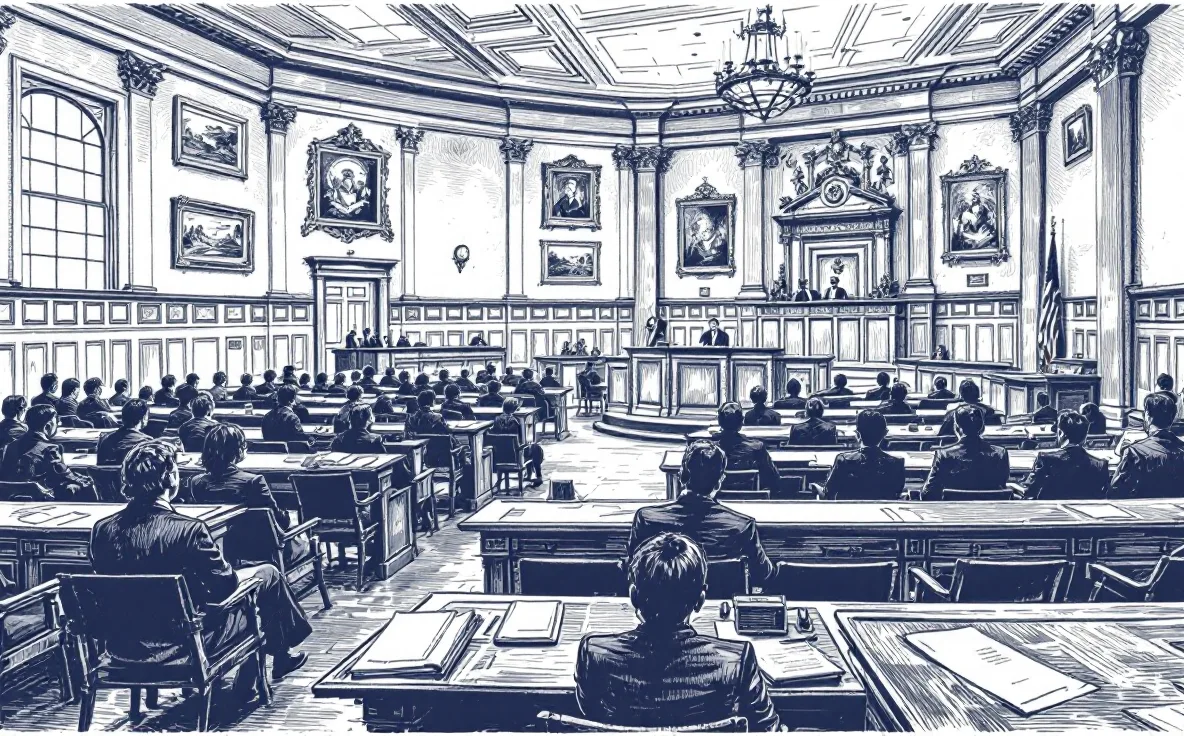
Political courage in a budget debate is often described as a willingness to make unpopular cuts. That definition is too narrow. Courage can also mean explaining a necessary revenue measure, admitting that a favored proposal will not save much money, or protecting people whose needs are easy to overlook. The relevant question is whether leaders tell the truth about choices and accept responsibility for their consequences.
The historical URL connects budget realities with entitlement reform. The original text and publication date have not been recovered. This new educational treatment examines the fiscal and ethical issues behind that topic, using the 2011 budget outlook as historical context rather than claiming to reproduce the missing commentary.
Entitlement describes a budget mechanism
In public discussion, entitlement sometimes becomes a judgment about someone's attitude. In federal budgeting, it refers to a different idea: eligibility and benefits are established under governing law rather than decided solely through the annual discretionary appropriations process. The category includes programs with different beneficiaries, financing arrangements, and purposes.
That diversity matters. A retirement benefit, a health-insurance program, and a means-tested assistance program cannot be assessed simply by applying the same percentage reduction to each. A change in eligibility, benefit calculation, payment to providers, or revenue can affect different people in different ways.
Before considering a reform, identify the program, the provision being changed, and the people affected. A claim about the entire federal budget may be accurate at a broad level while saying little about the particular proposal in front of the public.
Long-term pressure is not the same as immediate crisis
The Congressional Budget Office's 2011 long-term outlook discussed the effects of aging, health-care costs, revenues, and existing policy on future federal finances. It also emphasized that its scenarios depended on assumptions and were not predictions of the precise policies that would be adopted.
That distinction affects the timing of reform. A long-term imbalance may justify gradual changes that give households time to adjust. An immediate administrative problem may require a different response. Treating every concern as an emergency can make a poor design seem unavoidable; treating every concern as distant can make adjustment harder later.
Readers should ask what period a claimed saving covers. A measure that produces a small first-year saving may have a larger long-term effect. Another may move costs outside the reporting period without resolving them. The time frame belongs in the explanation, not in a footnote that only specialists can find.
Follow costs beyond the government ledger
A reduction in federal spending does not necessarily mean that the cost of a service disappears. Some costs may move to households, employers, state governments, providers, or unpaid caregivers. A proposal can still be justified, but the transfer should be described accurately.
Consider a hypothetical change that lowers public payments for a service. Providers might become more efficient, reduce the service, charge someone else, or leave the program. Which outcome is likely depends on circumstances. Counting the federal saving without examining those responses gives an incomplete picture.
The same discipline applies to revenue. A proposal should explain who is likely to bear the economic burden, not merely who sends the payment to government. Distribution and behavioral responses can be uncertain. Acknowledging that uncertainty is more useful than presenting one favorable estimate as a guaranteed result.
Promises and transitions
People organize their lives around rules they reasonably expect to continue. That does not make every rule permanent, but it gives transition design moral importance. Someone close to retirement may have fewer ways to adapt than someone beginning a career. Someone with substantial resources may absorb a change more easily than someone with little margin.
Fairness therefore requires more than applying an identical formula. Policymakers need to consider notice, phase-in periods, protections for people with limited alternatives, and the interaction with other programs. A reform may look moderate in isolation while combining with other changes to create a large burden.
There is a responsibility to future beneficiaries as well. Avoiding every adjustment can leave a system less able to meet later obligations. The difficult task is to maintain protection while explaining what can be sustained and how the costs will be shared.
What honest leadership sounds like
An honest explanation identifies both the preferred change and its strongest objection. It does not describe all beneficiaries as undeserving or all critics as indifferent to fiscal reality. It recognizes that administrative design and moral commitments must be examined together.
Public officials should also distinguish a proposal's fiscal effect from their broader reasons for supporting it. A change may be favored because it alters responsibility or choice, even if its savings are uncertain. That argument should be made directly rather than disguised as a technical necessity.
Citizens have a role in this honesty. Demanding every favored benefit, every tax reduction, and no borrowing is not a coherent instruction to government. A serious contribution is to compare alternatives and acknowledge the cost of one's own preference, while insisting that those with the least capacity are not treated as the easiest adjustment.
A checklist for reading a proposal
Ask what changes, when it changes, who is affected, and which assumptions drive the estimate. Then ask what happens if costs or revenues differ from expectations. Finally, identify the review process: who will monitor outcomes and how can the policy be corrected?
Budget courage is demonstrated by that willingness to explain and be accountable, not merely by the severity of a proposal. Intergenerational justice provides a related ethical frame. Our public justice section and institutions collection examine how durable responsibilities can be financed and administered fairly.