
From the historical topics collection
Same-Sex Marriage and the Continuing Conversation
Historical date unavailable
This is a newly written treatment of the historical topic, revised 28 October 2026. The original publication date has not been verified. No historical date is assigned to this replacement text.
Read the source record. Date evidence: unverified.
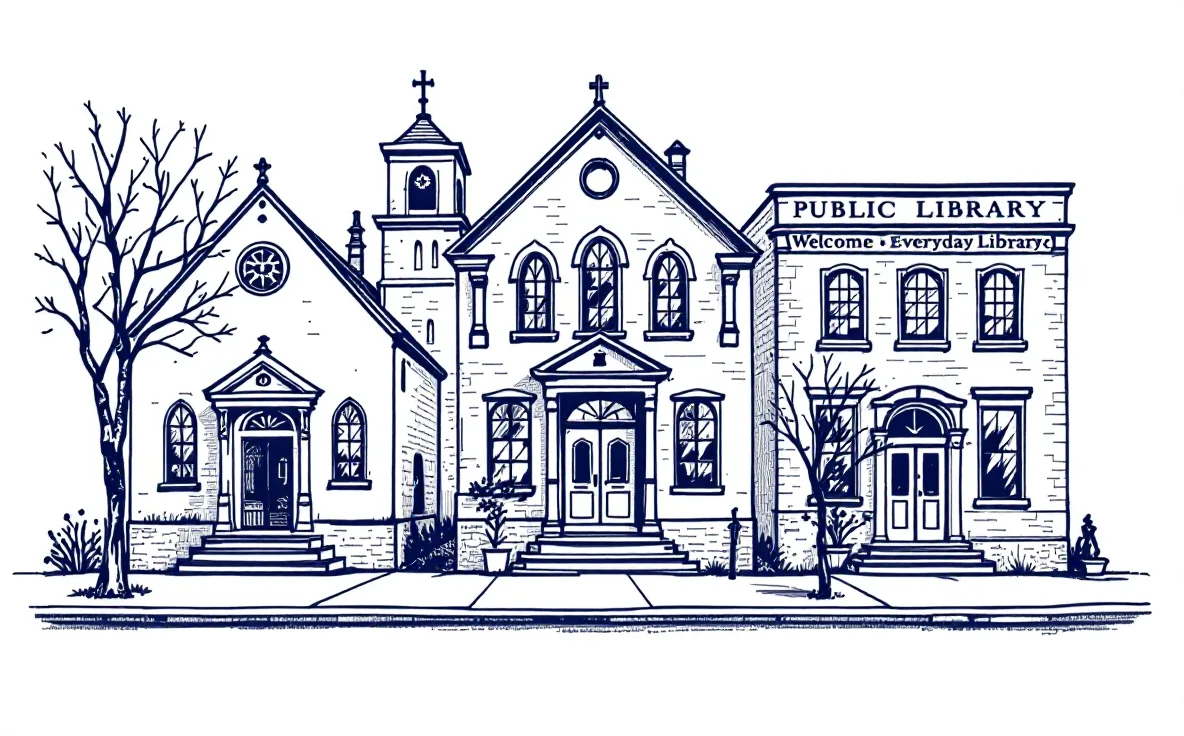
Discussions of same-sex marriage have involved several distinct questions: what civil law recognizes, how religious communities understand marriage, what equal treatment requires, and how citizens can live together while disagreeing. Treating all four as a single dispute makes both the legal history and the moral arguments harder to understand.
This historical path identifies a continuing conversation about marriage and the Defense of Marriage Act, commonly called DOMA. The original installment has not been recovered, so this newly written explanation does not reconstruct its position or invent the contents of an earlier installment. It offers a dated account of the legal framework and a method for discussing the disagreement respectfully.
What DOMA did
Congress enacted the Defense of Marriage Act in September 1996. Its sections addressed different matters. Section 2 concerned recognition by states and other jurisdictions of same-sex marriages recognized elsewhere. Section 3 supplied a definition of marriage and spouse for federal law that excluded same-sex couples.
Those provisions should not be merged in a summary. Federal recognition and the power to license marriages are different issues. A couple could have a marriage recognized by a state while encountering a different rule in a federal program. That mismatch became central to the litigation that reached the Supreme Court in United States v. Windsor.
The consequences were practical as well as symbolic. Legal recognition can affect responsibilities and benefits involving taxation, inheritance, and other parts of family life. A discussion confined to abstract definitions can miss what the classification means for people arranging their lives.
Windsor and the later marriage decision
In United States v. Windsor, decided June 26, 2013, the Supreme Court held DOMA's section 3 unconstitutional. The case arose from federal estate-tax treatment of a surviving spouse whose marriage was recognized by New York. The ruling addressed the federal exclusion, rather than itself requiring every state to license same-sex marriages.
The Court addressed state licensing and recognition in Obergefell v. Hodges, decided June 26, 2015. That decision held that the Fourteenth Amendment required states to license marriages between two people of the same sex and recognize such marriages lawfully performed elsewhere.
These dates belong to the legal events, not to the unrecovered article. Keeping that distinction visible prevents a historical essay from acquiring a publication date merely because it discusses a well-known case. This account describes those decisions as historical developments and is not a guide to resolving a present legal dispute.
Civil recognition and religious doctrine
Civil government and religious communities do not perform identical tasks. A government's recognition of a legal relationship concerns public rights and responsibilities. A religious community's teaching may address theology, worship, membership, and the meaning of a marriage within its tradition.
Distinguishing the tasks helps clarify a disagreement without pretending that every boundary dispute disappears. Religious communities can differ among themselves, and members within them may also disagree. Citizens should not be assumed to share one doctrine simply because they belong to a broad religious category.
For a careful conversation, specify the institution and the action. A question about a civil license differs from a question about a religious ceremony. A question about public employment differs from a question about internal religious leadership. Legal claims concerning those settings require their own facts and authorities; a general slogan about liberty or equality cannot decide them all.
Disagreement must not erase people
The people whose relationships are being discussed are participants in public life, not illustrations supplied for someone else's debate. Respectful discussion avoids reducing same-sex couples to a policy problem or treating religious citizens as if their convictions must be insincere. It also permits direct criticism of a claim or practice without making a person's dignity conditional on agreement.
That standard does not require treating every argument as equally persuasive. It requires responding to the actual argument, explaining the reasons for disagreement, and paying attention to the consequences of proposed rules. Personal experience can reveal an overlooked burden; it should be heard without being turned into an invented representative story.
Participants should also distinguish a description of law from approval of it. Someone explaining a court's holding is not necessarily endorsing every part of its reasoning. Someone stating a theological belief has not thereby explained how a government should treat citizens who reject that belief.
Continue with more precise questions
A useful discussion can begin with the concrete setting: which institution is deciding, what action is proposed, and who is affected? Then identify the asserted obligation and the evidence supporting it. This process often reveals that participants are answering different questions.
Historical study adds another discipline. Read the statute, majority opinion, and relevant dissents separately. Do not attribute a later development to an earlier court or assume that a political slogan accurately describes a holding. Legal chronology is not a substitute for moral reasoning, but inaccurate chronology makes moral discussion harder.
Our faith and pluralism section considers life together across deep differences. The institutions collection examines distinct forms of authority, and the reading room provides further material for a patient, informed conversation.