
From the historical topics collection
The True Genius of the U.S. Constitution
Historical source: 15 June 2012
This is a newly written treatment of the historical topic, revised 28 October 2026. The source date describes the archive evidence; it is not the publication date of this replacement text.
Read the archived source. Date evidence: Date printed in the archived article.
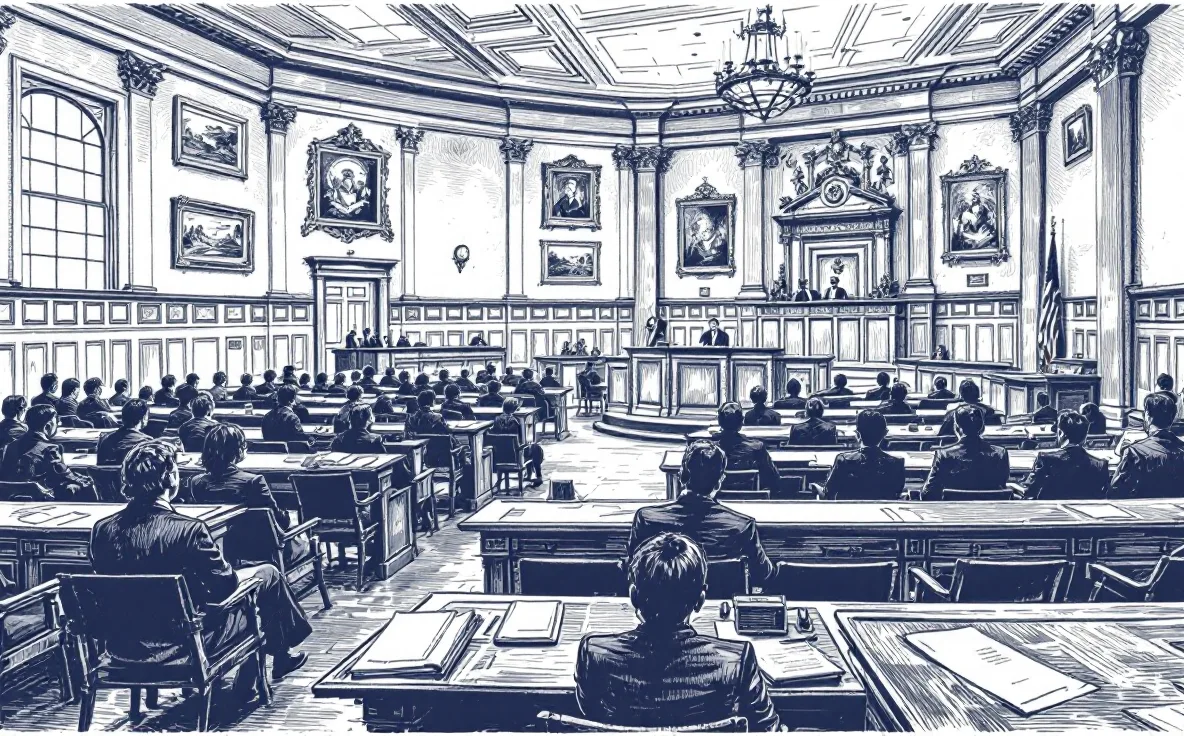
A constitution is a document, a distribution of powers, and a practice of living under rules. Those three things can reinforce one another, but they are not identical. An elegantly designed institution can be weakened by officials who refuse its limits. A political culture with admirable habits still needs rules capable of surviving a difficult dispute.
The June 15, 2012 essay preserved at this address asked why the United States Constitution had endured. This new discussion examines that question without treating endurance as proof that every feature of the original settlement was just. Constitutional history includes exclusion and correction as well as continuity.
What the document distributes
The constitutional text assigns legislative power to Congress, executive power to the president, and judicial power to a federal judiciary. It also specifies procedures through which institutions interact. The president's veto and Congress's power to override it are examples of interaction, not total separation.
Federalism adds another distribution: national and state governments have different responsibilities within a constitutional order. The resulting system requires attention to which body has authority over a particular matter. Public frustration often grows when people ask an institution to perform a task assigned elsewhere.
None of this makes conflict an accident. Institutions with different responsibilities can reach different judgments. The important question is whether disagreement proceeds through an intelligible framework and whether each participant accepts that its own power has boundaries.
Why procedures are insufficient by themselves
A rule can specify a vote without guaranteeing that participants will accept a loss. A court can issue an order without being able to create public confidence by declaration. A legislature can receive information while refusing to examine it. The gap between formal authority and actual conduct is therefore central to constitutional life.
James Madison's Federalist No. 10 treated faction as a recurring consequence of human differences and interests. His argument sought arrangements that would constrain harmful effects rather than require everyone to think alike. Readers need not accept every feature of his solution to recognize the problem: a group can seek its own advantage at the expense of others' rights.
Political habits matter because written rules cannot anticipate every use of discretion. Officials routinely choose what to disclose, whom to consult, how carefully to explain a decision, and whether to exploit an ambiguity. A constitutional culture must evaluate those choices as well as ask whether an action crossed a legal line.
Endurance and justice are different measures
Longevity can show that a system has managed succession and conflict. It does not establish that all people have shared equally in its protection. The original constitutional settlement accommodated slavery, and the later history of citizenship and rights cannot be described as the automatic unfolding of an already complete promise.
The amendments document changes to the constitutional order, including the abolition of slavery and new guarantees concerning citizenship and equal protection. Reading the original text alongside those changes gives a more honest account than treating the document as frozen at its founding.
This distinction also improves comparisons with other countries. A short-lived constitutional document might be replaced after a profound political transformation. A long-lived one might operate through extensive amendments, judicial interpretation, and changed practices. Counting years alone cannot explain either country's experience.
Constitutional habits are learned locally
The skills required for constitutional government are not confined to national office. People practice them when they follow a fair procedure, distinguish a rumor from evidence, and recognize a losing participant's continuing membership in a group.
Consider a hypothetical association revising its rules. The majority could arrange a convenient vote without notifying absent members. It might win the immediate dispute while damaging confidence in future decisions. Giving notice, sharing the proposal, hearing objections, and recording reasons would not guarantee agreement. It would make the exercise of authority answerable.
The analogy has limits: a voluntary association is not a government. Yet it clarifies why procedures and habits interact. Our institutions section examines how different kinds of organizations exercise authority and why their responsibilities should not be collapsed into one model.
How to read a constitutional claim
When someone says that the Constitution requires a particular result, begin with the provision at issue. Then distinguish the text, the historical argument, the judicial interpretation, and the speaker's preferred policy. These may support one another, but they are not the same thing.
Ask also what would happen if an opposing group used the same claimed power. A principle that seems acceptable only when exercised by one's allies may be a preference disguised as a rule. This test does not resolve every dispute, but it exposes an inconsistency worth discussing.
Constitutional endurance depends on institutions that can act, limits that can be enforced, and people willing to maintain both. The civic practice section follows the everyday side of that responsibility. The Constitution's historical achievement is best studied through its actual arrangements and contested development, with room for admiration, criticism, and repair.