
Small repairs in a shared duplex are also a question of fairness
In a shared building, a deferred repair is a debt paid by the neighbors who live beside it. Here is a fair way to order the list.
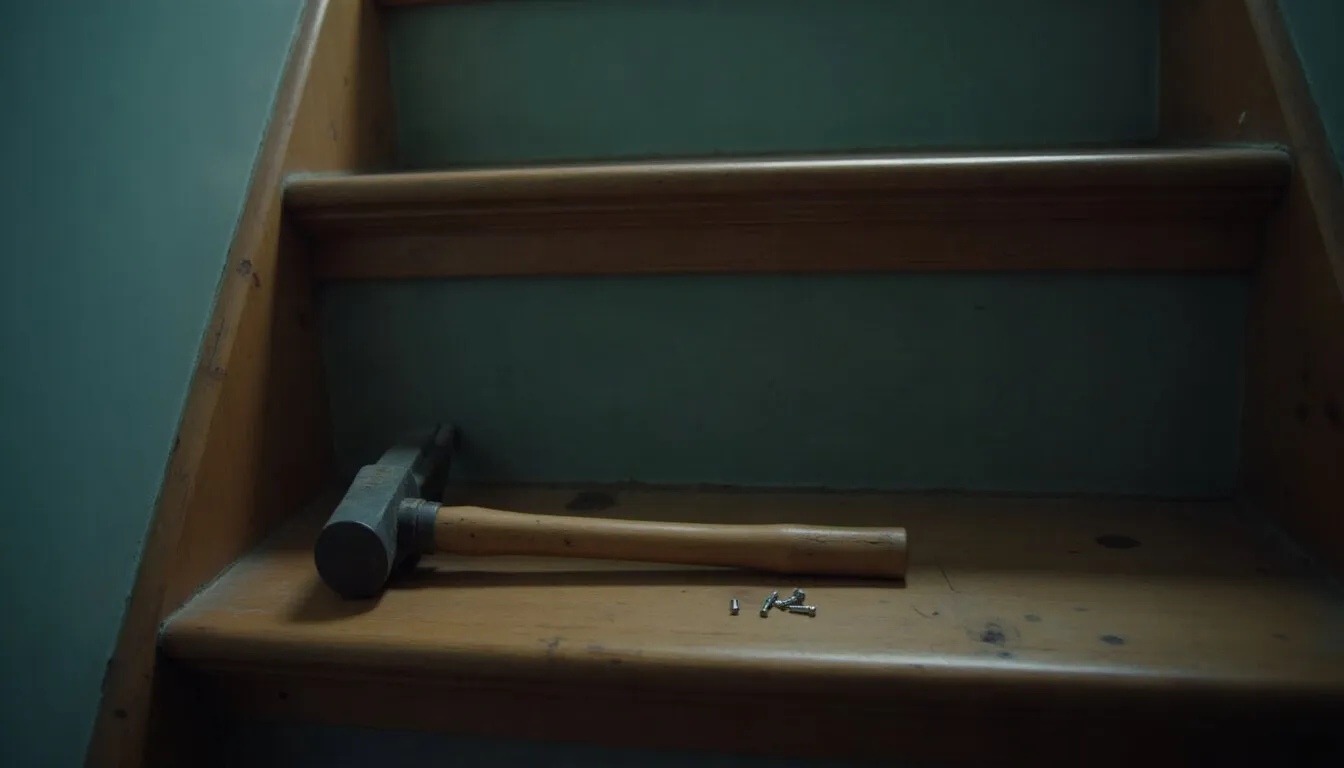
There is an old observation that what belongs to everyone tends to be cared for by no one. It is usually applied to pastures and fisheries. It applies just as well to a sticking storm door, a loose stair tread and a sagging gutter on a hypothetical duplex in Lexington, Kentucky, where the owner lives upstairs and a tenant family lives below.
None of these problems is dramatic. When the owner finally types handyman construction into a search box, the list is usually longer than anyone admitted, and some of it has quietly become the downstairs family's problem. The water from that gutter lands by their door, and the loose tread is on the stairs their children use every morning.
This essay treats the small repair as a matter of fairness between people who share a building. It is a way to think the decision through, not technical or legal advice. Anything involving wiring, gas, structure or work high on a roof belongs with a licensed professional, and the essay assumes that from the start.
Small repairs pile up because each one looks optional
The private choice looks modest. An owner has a dozen small jobs and a limited budget of money and attention, and none of the jobs is urgent on its own. A cabinet hinge can wait. A cracked piece of trim can wait. A door that has to be lifted to latch can wait, and so can the patch of drywall where a doorknob went through. The trouble is that the list does not wait. It grows in the background, and each item that is put off makes the next one easier to put off.
There is a quiet logic to bundling these jobs instead of chasing them one by one. A capable handyman or general contractor can walk the whole building in a single visit, sort the list into what they can handle and what needs a licensed trade, and give a written scope that the owner can actually read. That last part matters more than it seems. A list in someone's head is a set of good intentions. A written scope is a promise with edges, and it can be shown to the people who live with the results.
It also forces an honest look at what has been deferred and why. Some items were put off because they were cheap and boring. Others were put off because the owner did not live next to them. That second group deserves particular attention, because it is where the private choice starts to become a public one.
The downstairs family carries part of the cost
In a duplex the owner's decisions land on more than one household. The tenant family below lives with the gutter that spills by their door, the stair that shifts under their feet and the window that will not quite close when the weather turns. They did not choose when these things would be fixed. They may not even feel free to ask twice, because people who rent often worry, with or without reason, that complaining will be remembered when the lease comes up.
Others are touched as well. The neighbor whose side yard takes the runoff has an interest in that gutter. A future buyer will inherit whatever was patched badly or not at all. A visiting grandparent who does not know the third stair is loose has a stake in it without knowing it exists. Small repairs rarely make the news, but the people they affect are real, and most of them have less say than the person holding the list.
We tend to think of maintenance as a private virtue, like keeping a tidy desk. In shared housing it is closer to a debt. Whoever defers it is borrowing against the comfort and safety of the people who share the walls, and the interest is paid by them.
Point of order. A tenant who has reported the loose tread twice might reasonably ask why a repair she needs waits on the owner's schedule. The fair answer is that safety items reported by the people exposed to them go to the top of the list, with a date she is told in writing. That costs little and settles the question before it becomes a grievance.
A fair order of work starts with risk, not convenience
The fair standard is not complicated, though it asks for some discipline. Rank the list by who is exposed and how badly, not by what is easiest or what bothers the owner most. A loose handrail outranks a scuffed baseboard. Water that is reaching a wall outranks a door that sticks, because water spreads and the cost of ignoring it grows on its own. Appearance comes last, even when it is the item the owner most wants done.
The second part of the standard is that the owner's own unit gets no special treatment. If the upstairs bathroom fan was replaced last spring and the downstairs one still rattles, the order of work has drifted toward convenience. The tenant's home is no less a home because someone else holds the deed.
The third part is notice. People who share a building deserve to know when work is coming, how long it will take and when someone will need to come inside. Give that notice in writing and in good time, and follow whatever your lease and local rules require. Ask the tenants which hours are hard for them, and mean the question. A family with a night-shift worker or a newborn has reasons that a schedule should respect when it reasonably can.
The last part is honesty about limits. A good handyman will say plainly when a job belongs to an electrician, a plumber or a roofer, and a fair owner will pass that on rather than pretending the small fix covered the larger problem. A patch over a stain is not a repair if the leak behind it is still running.
The practical test is a list someone else can read
The simplest test of whether the decision held up is whether a stranger could follow it. Keep one written list for the building, and keep it where both households can see it or ask about it.
- Record each item with the date it was reported and who reported it.
- Mark which items are safety, water, function or appearance, and work in that order.
- Note what was done, when, and by whom, including anything referred to a licensed trade.
- Tell the affected household when their item is scheduled and when it is finished.
- Set a date for the next walk through the building, ideally before winter and again after the spring storms.
When an item is hard to place, a short comparison helps.
| Choice | Who is exposed while it waits | How the problem spreads | Who decides |
|---|---|---|---|
| Fix now | No one, once the work is done | It stops here | Owner, after asking the tenant about timing |
| Fix at the next visit | The household nearest the problem | Low for cosmetic items, high for water | Owner, with the date shared in writing |
| Leave it | Whoever lives with it, often the tenant | Grows quietly, especially with moisture | Usually no one, which is the problem |
The table is not a formula. It is a way to make the person with the least say visible at the moment the decision is made.
The same habit serves a club or a congregation
The duplex is a small case of something larger. A veterans' club, a neighborhood association with a meeting room or a congregation with an old hall faces the same drift, only with more people and a committee instead of a single owner. Volunteers patch what they can. The loose railing on the side entrance is noticed by everyone and owned by no one, because each person assumes another person has already raised it.
The remedy is the same written list with a named person responsible for it, and the same order of work: risk first, water second, function third, appearance last. A committee that spends shared money should also show its work. Ask for written scopes, record who was asked and why one was chosen, and report back to the members at the next meeting. That is not bureaucracy for its own sake. It is how a group keeps a building in good repair without relying on one tireless volunteer who will not be there forever.
The common good, briefly
A small repair in a shared building is never only the owner's business, because the people who live beside it pay for the delay. Write the list down this week, put the items reported by the people most exposed at the top, and tell them when the work will happen.

Gideon Voss
Editorial pen name. Books, ideas and arguments about our shared life.
Revised 9 November 2026