Before a bathroom remodel, ask who else will use the room
A bathroom remodel is often planned by the people paying for it, not by the relative or guest who will depend on the room most.
Designers sometimes speak of building for the body you will have rather than the body you have now. The idea is simple and easy to ignore. Suppose a hypothetical couple in Scottsdale, Arizona, plan to redo the bathroom off their guest room, and they are thinking about tile and lighting. Within a year, one of their mothers may move in.
A remodeler who handles a Scottsdale custom bathroom remodel can help a family sort out what that room needs before anything is ordered. The harder question comes first, though, and it is not about finishes. It is about whose needs the room is being built around, and who gets asked.
This essay is about a household decision that turns out to involve more people than the ones paying for it. It is a way to think the choice through, not design, medical or legal advice. Plumbing, electrical and structural work belongs with licensed professionals, and questions about a person's health belong with that person and their doctor.
The private choice looks like a matter of taste
On its face, a bathroom remodel is a set of preferences. The owners choose a vanity, a shower or a tub, the tile, the fixtures, the light. They weigh what they can afford against what they want, and they hope the result will still look right in ten years. Those are reasonable concerns, and nothing in this essay asks anyone to give them up.
What gets lost is that taste is usually set by the people who are healthy, present and paying. The owners stand in the showroom. The mother who might move in does not. Neither do the grandchildren who visit at the holidays, the friend who uses a cane, or the next buyer of the house, who will inherit whatever was chosen. A custom room is custom to someone, and it is worth asking who that someone is before the plans are drawn.
A careful remodeler will usually ask about this early, along with practical questions about how the room is used, who uses it, and what the household expects over the next several years. Those questions are not a sales technique. They are the difference between a room that suits a photograph and a room that suits a family.
The people who will use the room are not all in the conversation
The most obvious person missing from the conversation is the one most likely to depend on the room. An older parent who is moving in may have firm views about privacy, independence and how much help she wants. She may also feel awkward saying so, especially in a house that is not hers. A step over a high tub edge, a slippery floor or a fixture that is hard to grip can turn a guest into someone who needs help, and many people would rather avoid that than ask for it.
Other people are touched too. Visitors with limited mobility will either use the room comfortably or quietly avoid the house. A teenager who shares the bathroom on weekends has an interest in the layout. A future owner, years from now, may be an older couple or a young family, and the room will either serve them or need another round of work. In a dry, hot place like the Arizona desert, where many people come to retire and where family members often move in later in life, these are not unusual cases.
The point is not that every remodel must anticipate everything. It is that the people with the least say are often the ones who will live closest to the result.
Point of order. A parent who was never asked might reasonably say that a room built for her was designed around everyone's preferences except hers. The fair answer is to ask her directly, early, and to let her views change the plan where they can. That costs one conversation and settles the question before the tile is set.
A fair plan asks before it decides
The fair standard here is a familiar one: the people who will live with a decision should have a voice in it, in proportion to how much it affects them. For a guest bathroom that a parent will use daily, her voice counts heavily. For a room the owners alone use, it counts less. Fairness is not a matter of giving everyone a vote. It is a matter of not deciding about people without them.
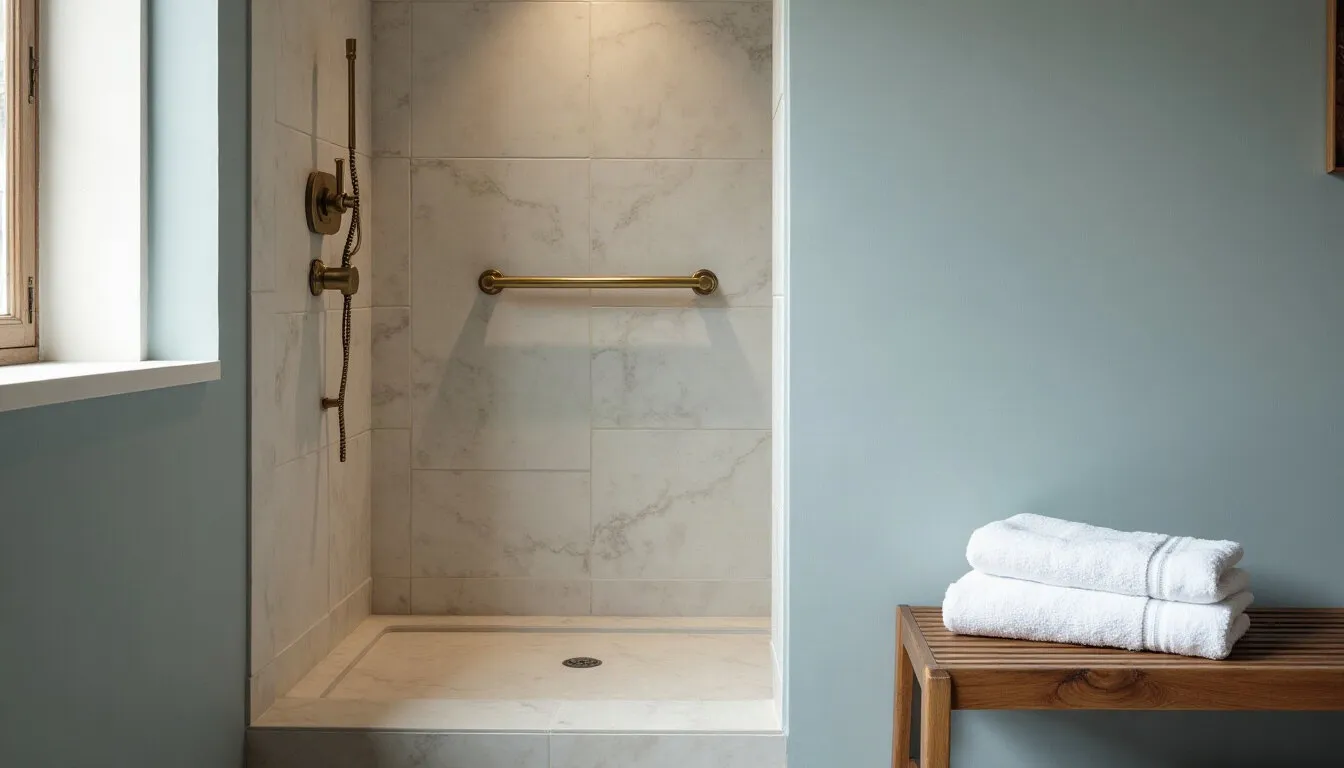
In practice this means three habits. The first is asking open questions instead of offering a finished plan for approval. "How do you like to bathe" invites a real answer, where "We were thinking of a big tub" invites polite agreement. The second is weighing changes that help many people at little cost to anyone. A walk-in shower without a high lip, slip-resistant flooring, good lighting and reinforced walls where grab bars could go later tend to serve almost everyone, which is the whole idea behind designing for the body you will have.
The third habit is honesty about limits. Not every wish fits every budget or every floor plan, and a good remodeler will say so plainly rather than promising what the space cannot give. When something has to be cut, say what and why to the people affected. A trade-off that is explained is easier to accept than one that is discovered.
The practical test is whether the room still works for the person with the least say
A remodel can be judged by a simple question: could the person most dependent on this room use it alone, safely and with dignity, on an ordinary morning? If the answer is uncertain, the plan is not finished.
A short checklist helps before the design is settled.
- Ask each regular user, including any family member who may move in, how they use a bathroom and what makes one hard to use.
- Walk the existing room together and note every step, edge, tight turn and hard-to-reach fixture.
- Ask the remodeler which changes would serve future needs at modest added cost, and which are better left for later.
- Keep a written record of the plan, the reasons for each major choice and what was deferred.
- Set a date, perhaps a year after the work, to ask the same people how the room is working.
When the household is weighing a larger change, a comparison can make the trade-offs visible.
| Choice | Who benefits | Who is disturbed during the work | Who should be asked |
|---|---|---|---|
| Keep the tub, update finishes | Owners who prefer baths | Household, briefly | Every regular user |
| Convert to a low-entry shower | Older relatives, guests with limited mobility, future buyers | Household, for longer | The relative most affected, first |
| Plan for later changes only | Owners now, others in time | Household, briefly | Anyone likely to move in |
None of these is the right answer everywhere. The table simply keeps the people who are not in the showroom on the page.
The same reasoning applies beyond the home
A small congregation or club that is renovating the restroom in its meeting hall faces the same question on a larger scale. The committee that chooses the fixtures is rarely the group that most needs them. Members who use wheelchairs or walkers, parents with small children and older volunteers who stay late after events all have a stake in the room. Asking them before the plan is final, and telling them what was decided and why, turns a building decision into an act of welcome.
The common good, briefly
A bathroom is one of the most private rooms in a house and one of the most shared, because everyone who stays there depends on it. Before any plan is signed this week, ask the person most likely to rely on the room what would make it work for them, and write the answer down.

Gideon Voss
Editorial pen name. Books, ideas and arguments about our shared life.
Revised 9 November 2026