
From the historical topics collection
A Crisis of Civility and Representation
Historical date unavailable
This is a newly written treatment of the historical topic, revised 28 October 2026. The original publication date has not been verified. No historical date is assigned to this replacement text.
Read the source record. Date evidence: unverified.
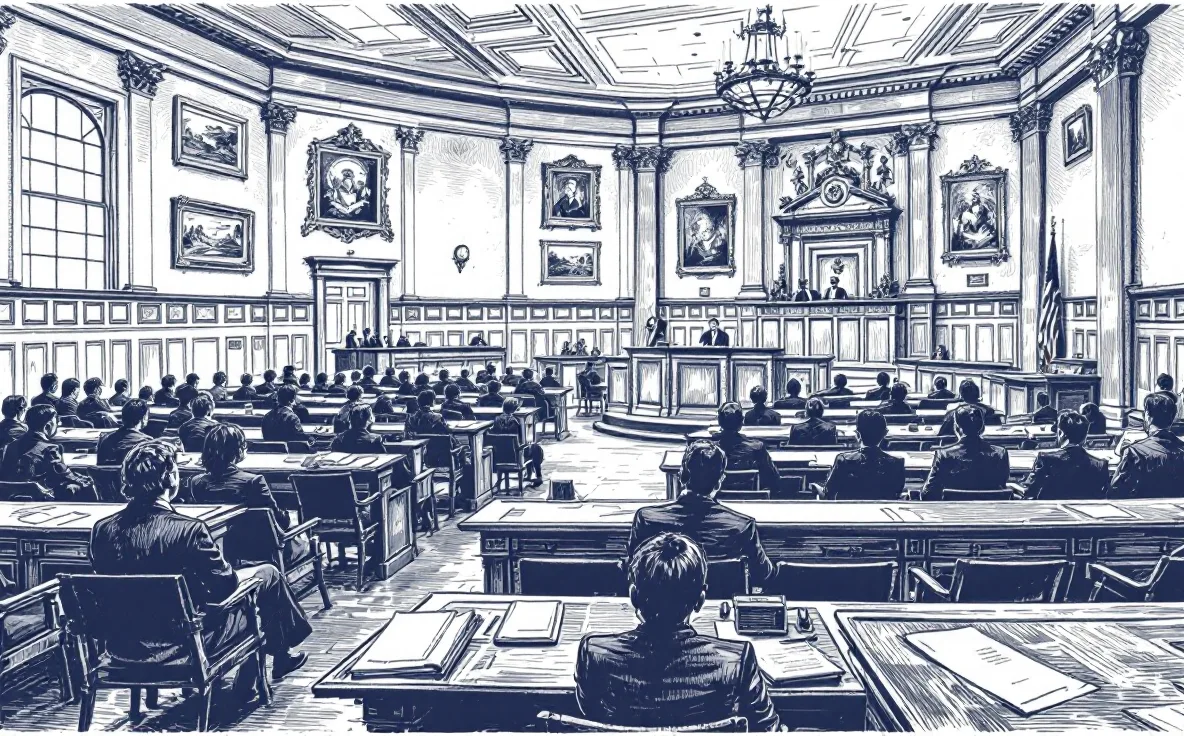
A crisis of civility can be a crisis of representation in disguise. People may speak harshly because a decision matters, but they may also distrust a process in which their concerns never seem to reach the agenda. Improving public discussion requires examining both conduct and the institutions through which people are heard.
The historical essay's title, “A Crisis of Civility and Representation,” appears in an academic bibliography, which identifies Timothy Sherratt and an August 19, 2011 date. The full archived article has not been recovered. This new discussion addresses its documented subject without claiming to reconstruct its argument or treating the bibliographic date as verified page metadata.
Representation involves more than resemblance
A representative can resemble constituents in background while failing to attend to their needs. Another can differ in background while taking those needs seriously. Neither personal identity nor a claim to shared values automatically establishes good representation.
The practical questions concern access, judgment, and accountability. Can people communicate a concern? Does the representative explain how competing claims were weighed? Can constituents identify what was decided, what remains uncertain, and what lies outside the office's power?
Representation also involves a tension between responsiveness and judgment. An official who simply repeats the loudest demand may neglect quieter residents. An official who treats expertise as a reason to ignore everyone else may lose contact with conditions that formal reports miss. A credible process gives reasons for deciding among claims instead of pretending that no such choice exists.
Civility cannot repair an inaccessible process by itself
Imagine a hypothetical public consultation conducted only during working hours, with technical documents released shortly before the meeting. The chair may be impeccably courteous. That courtesy does not remove the barriers to meaningful participation.
Conversely, a well-advertised meeting can be undermined by intimidation or repeated personal abuse. Formal access is not enough if some participants are effectively driven away. A fair process needs both workable opportunities to contribute and rules that protect people from being silenced through harassment.
These observations help distinguish civility from comfort. A meeting may become uncomfortable because a previously excluded concern is finally heard. That discomfort can be part of democratic learning. The appropriate response is to examine the claim and the conduct separately.
Our companion article on two reasons for civility explains how respect for persons can coexist with serious disagreement.
What the Christian-democratic question adds
The historical path places this topic within Christian democracy. That label should not be reduced to a present American party or assumed to describe one uniform program. Here it is useful as an invitation to consider how religiously informed ideas about social responsibility can enter a democratic order shared with people of other convictions.
One important primary text for Christian social reflection, Leo XIII's 1891 Rerum Novarum, considers the relationships among workers, employers, families, associations, and public authority. It is a Catholic teaching document, not an electoral instruction for today's citizens. Its attention to multiple social relationships helps frame a question that any democratic theory must confront: which institutions carry which responsibilities?
Religious conviction can motivate public service without giving its adherents exclusive ownership of public institutions. If a proposal is intended to govern a diverse community, its practical effects and institutional justifications need to be open to everyone who will live under it.
A majority is not the whole community
James Madison's Federalist No. 10 examined the danger that a faction, including a majority, might advance its interests against the rights of others. That historical argument remains relevant to the difference between winning a decision and representing a political community fairly.
An institution must be able to decide; permanent unanimity is not a workable expectation. But a losing participant retains a claim to fair treatment, accurate records, and future participation. A majority's authority should not become a license to make dissenting citizens invisible.
This distinction is especially useful when a speaker claims to represent the people as a whole. Which people were consulted? Which interests were considered? What evidence supports the claim? A public institution can recognize a mandate without pretending that disagreement has ceased to exist.
Make the route from voice to decision visible
A practical improvement is to publish a clear account of how contributions were handled. The account can identify major concerns, explain the decision, and state which questions remain open. It should distinguish an objection rejected on its merits from one the institution lacked authority to resolve.
That practice does not ensure popularity. It makes responsibility easier to locate. People can then criticize the reasoning instead of guessing whether anyone listened.
The institutions section follows this relationship between authority and accountability. A serious response to incivility asks people to argue responsibly while also asking whether public arrangements give their arguments a fair hearing. Better manners and better representation are related tasks, but neither can stand in for the other.