
From the historical topics collection
Authority, Citizenship, and Public Justice
Historical date unavailable
This is a newly written treatment of the historical topic, revised 28 October 2026. The original publication date has not been verified. No historical date is assigned to this replacement text.
Read the source record. Date evidence: unverified.
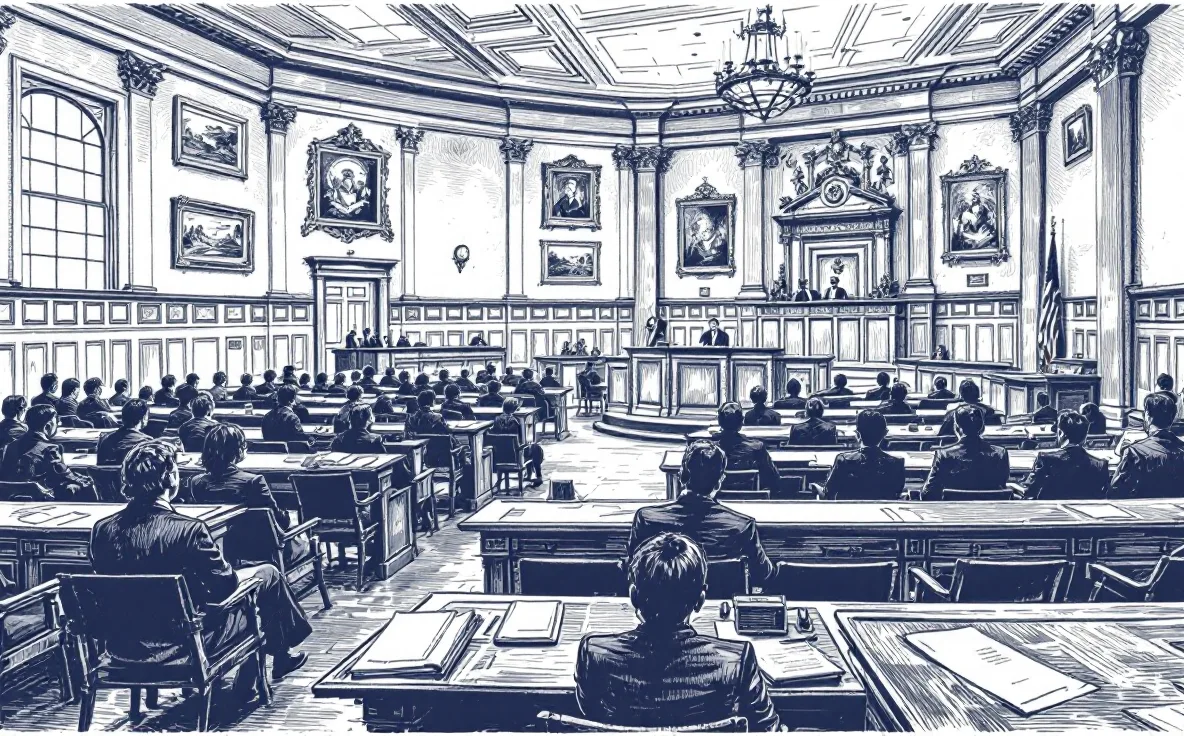
Authority is more than the ability to obtain compliance. A person can have influence without holding an office, and an officeholder can possess legitimate powers without being entitled to decide everything. Public justice requires attention to the purpose, scope, and accountability of those powers.
This is a new educational treatment of the subject identified in the historical address. The earlier article and its publication date have not been recovered, so no particular argument is attributed to its original author. The central question remains useful: how should citizens understand authority without confusing responsible obedience with uncritical submission?
An office has a task
A teacher, a judge, a parent, and an elected official exercise different responsibilities. Their authority cannot be evaluated simply by asking who is highest in a universal hierarchy. The relevant question concerns the work entrusted to each role.
A teacher may set classroom requirements but does not thereby acquire unlimited control over a family's life. An employer may direct work within a legitimate employment relationship but does not own an employee's conscience. A government may enforce public law while still having obligations to respect the distinctive responsibilities of households, religious communities, and other associations.
Thinking in terms of tasks creates a test for authority. Does the instruction serve the office's proper purpose? Is it within the officeholder's competence? Does it respect the standing of those affected? Can it be challenged through an intelligible process? These questions are more useful than assuming that either hierarchy or personal preference always wins.
A Christian account includes limits
Romans 13 has long been central to Christian reflection on governing authority. The passage describes public authority in relation to a purpose of service and addresses obligations such as taxes and respect. Reading it carefully requires noticing that moral description, rather than converting the existence of power into a guarantee that every command is just.
Christian interpretations differ about obedience, resistance, and the relationship between political and religious authority. A civic discussion should make the argument visible instead of treating a biblical reference as the end of inquiry. Which responsibility is being recognized? What would count as an abuse? What other obligations bear on the proposed action?
Those questions also help people outside the tradition understand a Christian contribution to public debate. A theological premise can be stated honestly while the practical reasoning remains open to examination.
Citizens occupy a public role too
Citizenship is not only a collection of benefits or an occasional expression of preference. It includes the capacity to ask for reasons, examine proposals, and participate in maintaining a shared legal order. Officials act within institutions that citizens may criticize without denying the need for public authority.
The First Amendment protects expression, peaceful assembly, and petition within the American constitutional framework. Those protections illustrate why disagreement belongs within political membership. This is a discussion of institutional principles, rather than legal advice about any particular protest or dispute.
A resident who asks how a decision was reached may be exercising civic responsibility. An official who explains the evidence and the limits of the office may be strengthening authority rather than surrendering it. The relationship becomes less healthy when questions are automatically treated as disloyalty or when criticism refuses to acknowledge any legitimate decision-making role.
Accountability needs an address
It is difficult to hold an institution responsible if no one can identify who made a decision. A clear record should distinguish the rule, the person applying it, the information relied on, and the available review. Transparency is not achieved simply by producing a large quantity of documents that no affected person can interpret.
Imagine a hypothetical permit application that is refused. The applicant should be able to learn whether the difficulty concerns a missing document, a substantive rule, or an official's discretion. Each calls for a different response. A generic refusal forces people to guess and can make an ordinary administrative process appear arbitrary.
The same principle applies within private organizations, although their legal obligations differ. A meaningful complaints process identifies someone able to investigate and explains what happens next. It should not promise a remedy that the reviewer has no power to provide.
Plural institutions need fair boundaries
Respecting different institutions does not mean placing them beyond criticism. A family, congregation, business, or charity can cause harm. Conversely, the presence of a problem does not establish that government should absorb all its responsibilities.
The task is to specify the public wrong and the appropriate response. Is protection required? Does a dispute need adjudication? Is information missing? Would a proposed intervention solve the problem while creating an avoidable intrusion elsewhere? Our institutions section examines these boundaries.
Authority becomes more credible when it is tied to service, limited by purpose, and answerable for its exercise. Citizenship becomes more substantial when people learn to distinguish an unwelcome decision from an unauthorized one, and a legitimate office from every action of its occupant. The civic practice section follows those distinctions into everyday public participation.