
From the historical topics collection
French-style Polarization in the U.S.?
Historical date unavailable
This is a newly written treatment of the historical topic, revised 28 October 2026. The original publication date has not been verified. No historical date is assigned to this replacement text.
Read the archived source. Date evidence: unverified.
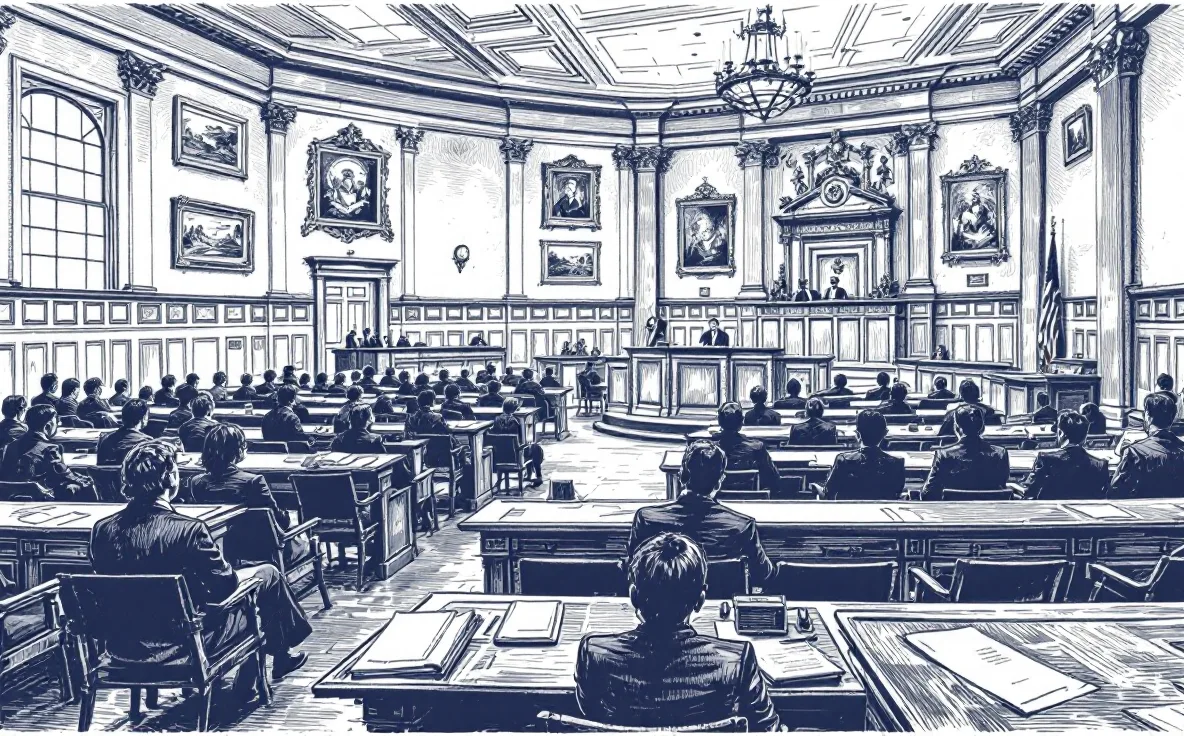
Could American political polarization come to resemble the conflicts of earlier French republics? The historical article at this address posed that question in October 2012. It used the comparison to ask whether political rivals still recognized a shared institutional order, and whether religious differences were becoming harder to manage within party competition.
The question is worth examining as an analogy, not accepting as a prediction. Political systems can share a symptom while producing it through different arrangements. A useful comparison must explain both the resemblance and the limits.
What the French comparison can show
France's Third Republic operated through a parliamentary system. The government depended on parliamentary support, unlike the American executive, whose constitutional tenure does not depend on maintaining a parliamentary confidence majority. The French government's own civic explanation distinguishes these institutional models. Vie publique on parliamentary and presidential government.
That difference matters when assessing instability. A frequent change of cabinet in a parliamentary system and a prolonged impasse between separately elected American branches are not the same event. Counting governments cannot by itself measure the intensity of social hatred, and counting legislative stalemates cannot explain their causes.
The stronger question concerns how political actors treat defeat. Do they regard the result as temporary within a legitimate system, or as proof that the system must be denied legitimacy? Do they preserve procedures that opponents can use, or attempt to make those procedures available only to themselves? Those questions can be asked across constitutional settings without claiming that the settings are interchangeable.
Religious division is not a complete explanation
A conflict described as religious may also involve education, regional identity, class, or control of institutions. A voter can be religious and disagree with a religious political leader. A party can defend secular government while containing members with strong religious commitments. The categories become misleading when they are treated as complete accounts of actual people.
The 2012 commentary offered a particular assessment of American party development. Its broad claims about religious alignment should be understood as an interpretation of that period, rather than a timeless map of citizens' beliefs. They do not establish how every denomination voted or explain every party position.
A better comparison separates several kinds of evidence: party platforms, public institutions, the conduct of political leaders, and citizens' own attitudes. Agreement among those kinds of evidence would strengthen a claim about polarization. A dramatic quotation or a single controversial proposal would not establish the whole pattern.
Kuyper and organized difference
The historical article proposed looking again at Abraham Kuyper's political legacy. The relevant idea is that society contains communities and institutions with distinctive purposes. Religious disagreement need not be overcome by forcing everyone into one comprehensive outlook before ordinary cooperation becomes possible.
The Netherlands offers a concrete institutional illustration in education. Its constitutional framework allows schools with religious or ideological identities alongside public schools, with public funding subject to conditions. That arrangement does not mean every religious claim prevails, or that schooling is beyond public scrutiny. It shows that a public system can make room for organized differences. Dutch government explanation of freedom of education.
It would be too simple to credit one person with every later feature of that settlement. The educational value is in examining the arrangement itself: which freedoms are protected, which common obligations remain, and who can challenge unfair treatment. Institutional pluralism requires rules as well as goodwill.
Cooperation without requiring agreement on everything
Imagine two organizations that disagree about religious education but share an interest in making school buildings accessible. They may cooperate on access while continuing their substantive disagreement about curriculum. Such cooperation is not necessarily ideological surrender. It can be a precise agreement about a limited responsibility.
The reverse is also possible. A coalition can conceal disagreement so thoroughly that its members cannot explain what they have authorized. That is why durable cooperation needs written purposes, clear limits, and a way to revisit decisions. A common institution should not become a means of silently imposing one participant's entire program.
This approach offers a practical test of institutional loyalty. Are participants willing to maintain procedures that protect people outside their own coalition? Can they distinguish a mistaken decision from a fundamentally illegitimate institution? Can they identify circumstances in which compromise would protect a shared good, and circumstances in which it would sacrifice someone else's rights?
Using the analogy carefully
The France comparison is most useful when it directs attention to political habits and constitutional arrangements. It becomes less useful when it labels opponents as historical villains or treats institutional collapse as inevitable. Historical study should enlarge the range of possible explanations, not merely supply stronger insults.
For readers interested in this line of inquiry, our institutions collection examines the responsibilities attached to public offices. The related discussion of faith and pluralism considers how deep disagreement can coexist with shared rules. Neither approach requires denying conflict. Both require asking what kind of common political life remains possible through it.