From the historical topics collection
A Non-messianic Presidency
Historical source: 10 August 2012
This is a newly written treatment of the historical topic, revised 28 October 2026. The source date describes the archive evidence; it is not the publication date of this replacement text.
Read the archived source. Date evidence: Date printed in the archived article.
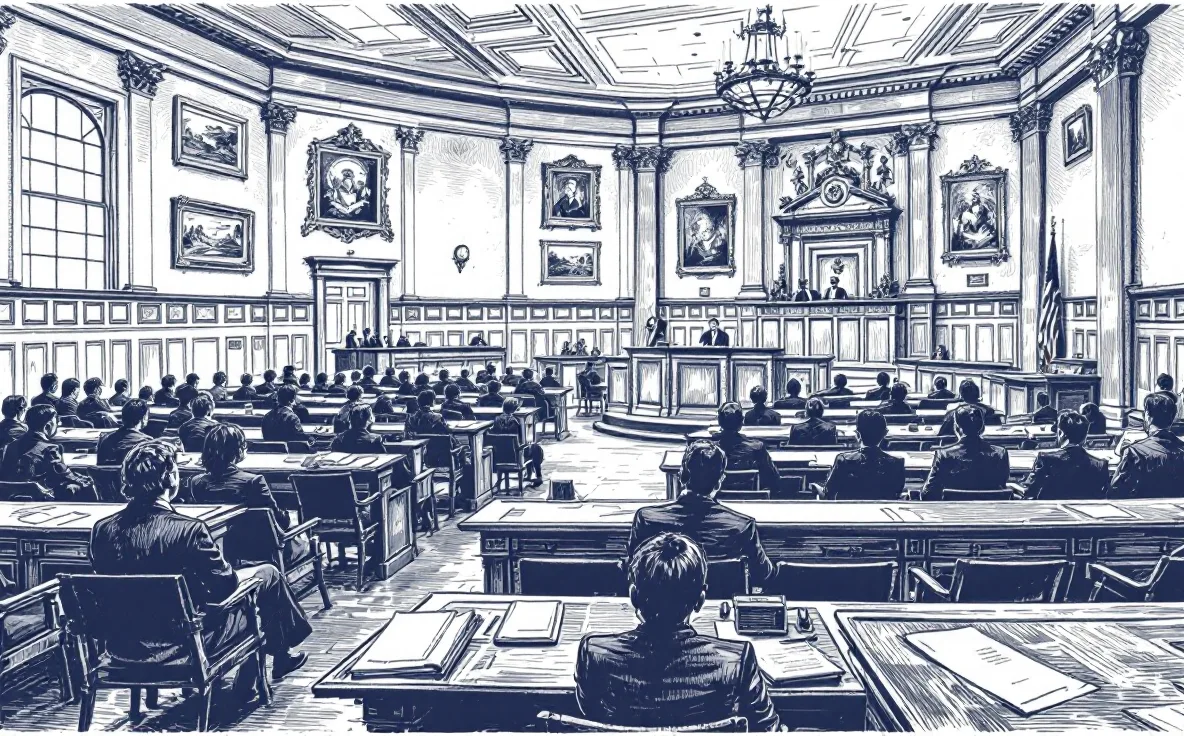
A president can exercise substantial power without being capable of repairing every public problem. The distinction sounds obvious until a campaign encourages citizens to treat one person's election as the answer to economic anxiety, cultural conflict, and institutional distrust. The historical article at this URL, dated August 10, 2012, questioned those expectations. This new treatment examines the constitutional and civic reasoning behind a presidency understood as an office with responsibilities and limits.
The word non-messianic is a political metaphor here. It describes resistance to treating a leader as a national savior. It does not imply that public leadership is unimportant or that citizens should become indifferent to the conduct of government.
Read the office through its powers
The Constitution's text separates legislative, executive, and judicial responsibilities. Article I places federal legislative powers in Congress. Article II establishes the presidency and describes executive duties, including the responsibility to take care that laws are faithfully executed. A president's prominence in public discussion does not erase those distinctions.
The order of the articles alone does not prove that the Constitution created parliamentary supremacy. Congress, the executive, and the courts operate within a constitutional arrangement rather than a system in which one ordinary institution can redefine every limit. The historical question of how the presidency became more prominent should therefore be separated from the legal question of what a particular power authorizes.
A useful way to assess any presidential promise is to identify its route to implementation. Does it require legislation, appropriated money, administrative action under an existing statute, cooperation from states, or decisions by private institutions? A promise can be sincere and still depend on actors the president cannot command.
Visibility can obscure responsibility
The presidency offers a recognizable person to whom citizens can direct praise or blame. Responsibility for a public outcome is often less concentrated. A change in economic conditions, for example, may involve decisions by legislators, agencies, employers, households, and institutions outside the country. That does not absolve an administration of responsibility. It means that explanation requires more than a portrait.
Consider a hypothetical promise to improve access to a local service. The federal government might supply funding, a state might administer the program, and a local provider might employ the staff. If the service fails, investigating the relevant stage is more useful than assuming either complete presidential control or complete presidential helplessness.
The same discipline applies to credit. A president may deserve credit for convening an agreement while legislators deserve credit for negotiating its terms and public employees deserve credit for carrying it out. Recognizing distributed responsibility makes later accountability more accurate.
Limits can make leadership better
A limited office is not necessarily a weak office. Defined responsibilities can clarify what leadership demands. A president may need to explain a proposal, build support, select capable administrators, and respond to scrutiny. Those activities are less theatrical than presenting personal will as sufficient, but they are central to governing through institutions.
There is also a practical difference between urgency and unlimited authority. An emergency can require rapid action, yet the existence of an emergency does not answer every question about legal authorization, duration, review, or the treatment of affected people. Citizens should ask which institution can assess an action and what happens when the immediate crisis passes.
This is one reason institutional criticism need not be personal hostility. Asking whether an action is authorized is a different question from asking whether the president's aims are admirable. A constitutional system needs room for both questions, including when the officeholder is popular with the people asking them.
A theological warning without a partisan instruction
Within Christian political thought, rejecting a messianic presidency can express a distinction between ultimate religious hope and the limited purposes of government. Government can protect, adjudicate, administer, and coordinate. It cannot guarantee moral renewal or remove every source of human conflict.
People outside that theological tradition can reach a similar practical judgment through other arguments. Concentrating hope in one leader can make criticism feel like betrayal and disappointment feel like total catastrophe. Treating an office as an office leaves more room for correction, replacement, and the continuing work of citizenship.
Neither argument tells citizens which party to support. The test applies to any leader and to one's own expectations. A person who demands limits only when an opponent holds power is defending a temporary advantage, not an institutional principle.
Questions that improve public discussion
When evaluating a claim about presidential leadership, ask what the proposed action actually is, which power supports it, and who else must participate. Then ask how success would be measured and what evidence would show failure. These questions turn general confidence or distrust into a discussion that can be examined.
Finally, ask what responsibility remains with citizens and other institutions. A school board, neighborhood organization, professional association, or congregation may have work that no presidential initiative can perform on its behalf. Recognizing that work avoids both exaggerated expectations of government and an equally exaggerated belief that government has no useful role.
The institutions collection explores those boundaries. Freedom as authority considers how responsibility can support liberty, while civic practice looks at participation beyond moments of national attention.