
From the historical topics collection
Peering into the Bird's Nest of Public Service Unions
Historical date unavailable
This is a newly written treatment of the historical topic, revised 28 October 2026. The original publication date has not been verified. No historical date is assigned to this replacement text.
Read the source record. Date evidence: unverified.
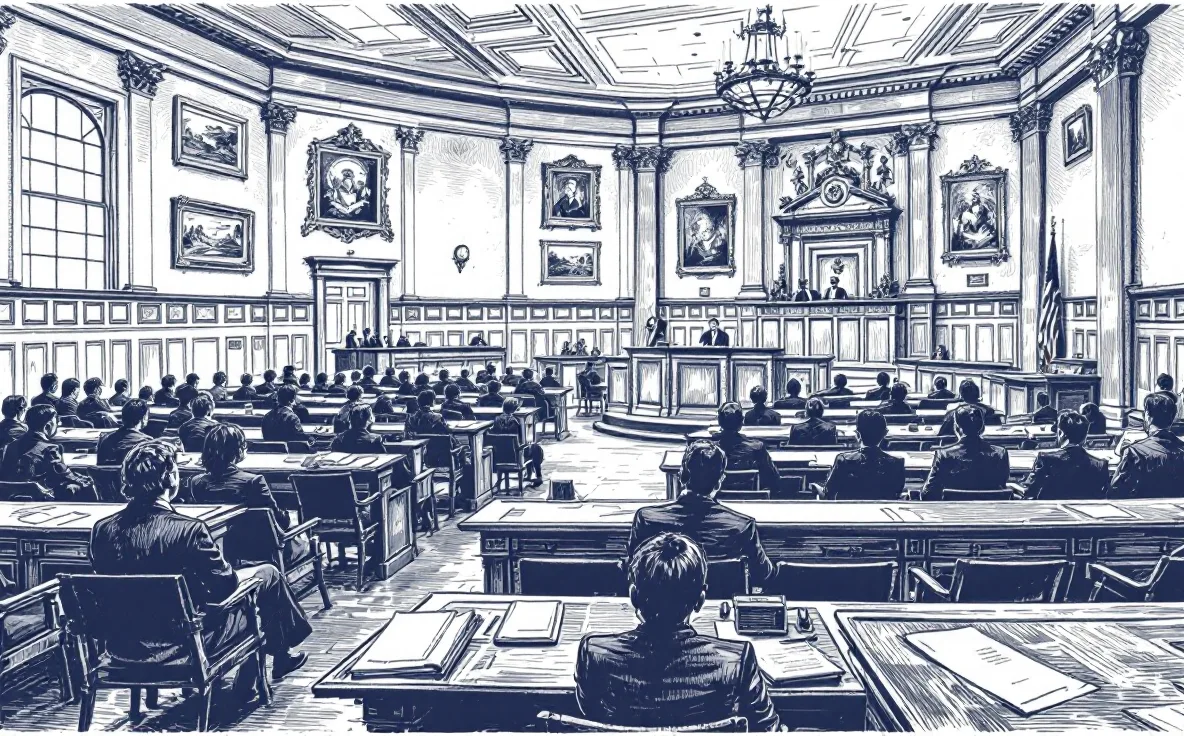
Public-service unions sit within several relationships at once. They represent workers, negotiate with public employers, affect services used by residents, and operate in a political setting where elected officials answer to citizens. That complexity explains why a dispute can look like a labor question to one participant and a question about democratic control to another.
A search-index excerpt for a historical Cardus media listing repeats the title “Peering into the Bird's Nest of Public Service Unions” and connects that discussion to the aftermath of Chicago's teachers' strike. The listing is paginated and its live contents have changed; the full original article and a reliable publication date have not been recovered. This is a new explanation of the institutional questions, not a reconstruction of an unavailable argument.
Public employment has a distinct setting
Public and private employment share important concerns: fair compensation, safe conditions, competent management, and a way to resolve disputes. But the employer in a public-service negotiation spends public resources and carries responsibilities toward people who may have no practical alternative provider.
The legal systems also differ. The National Labor Relations Board explains that public-sector employees are excluded from the National Labor Relations Act's coverage. That does not mean they have no rights. It means one must identify the relevant public-employment framework rather than assume that private-sector rules apply unchanged.
This historical discussion does not describe the current bargaining rights of workers in a particular jurisdiction. Those depend on the applicable law and circumstances. Its purpose is to explain why the institutional setting matters before a debate moves to claims about fairness or legality.
A union represents members, not every public interest
A union's representative role gives it reasons to pursue its members' concerns. That is not inherently improper. Workers need ways to articulate interests that an individual employee may be poorly placed to raise alone. Collective representation can bring practical knowledge about how a service actually operates.
Yet a union does not automatically speak for every resident or service user. A proposal that benefits workers may also improve a service, but the connection should be demonstrated. The interests can overlap without being identical. Public discussion becomes less clear when either overlap or difference is denied in advance.
The same standard applies to management. An administrator's claim to efficiency may identify a real improvement or conceal a transfer of burdens to staff and users. Elected status gives officials a legitimate role in deciding, but it does not make every financial assumption or organizational judgment correct.
Service users belong in the analysis
Consider a hypothetical dispute about staffing in a public library. Employees may raise workload and safety concerns. Managers may identify limited funding. Residents may care about opening hours, accessibility, and the quality of assistance. These concerns intersect, yet the residents are not necessarily present at the bargaining table.
A responsible process should explain how service effects will be assessed. Would a change reduce waiting times, increase closures, or alter the help available to people with additional needs? Which consequences are supported by evidence and which are predictions? Those questions connect employment terms with the public purpose of the institution.
The same method applies to schools or other services, but the details cannot simply be copied across settings. A scheduling issue in one institution may have very different consequences elsewhere. General claims about unions should not replace examination of the particular service and proposal.
Accountability has more than one direction
A public employer is accountable through political and administrative structures. A union should be accountable to its members through its own rules and representative processes. Both should be willing to explain claims that affect the wider public. These forms of accountability are different rather than interchangeable.
For example, a vote by members may authorize a union position without establishing that the position best serves all residents. An election may authorize officials to govern without settling every detail of a subsequent negotiation. Each decision deserves the weight appropriate to the institution making it.
Transparency can help, but it also requires judgment. Public explanations should reveal the substance of a dispute without exposing private employee information or misrepresenting unfinished negotiations. The aim is an informed public, not merely a continuous stream of tactical announcements.
Separate wages, work rules, and public policy
Labor disputes often bundle several matters together. Compensation concerns what employees receive. Work rules concern how tasks and responsibilities are organized. Broader policy concerns the service's purposes, funding, and relation to the community. A proposal may touch all three, but each needs its own explanation.
Separating them can reveal opportunities for agreement. A dispute presented as a total clash over public-sector unions may contain a solvable disagreement about a schedule, an unresolved financial question, and a genuine difference about institutional authority. Treating those as distinct does not guarantee settlement, but it improves the discussion.
The strongest public judgment therefore asks neither whether unions are always defenders of the common good nor whether they always obstruct it. It asks how a particular representative institution performs its proper role, respects other responsibilities, and contributes to a service citizens can rely on.
For a related historical case, read Wisconsin's budget battles. Our institutions section and community life collection examine the relationships between work, representation, and shared services.